TL;DR I’m dumb. The buzzing was caused by me touching my phone while it was charging. Seems like touching a charging cable electrifies you in a way that can’t be felt, but can be picked up by a sensitive device like the Sparrow. 100% user error. Problem has been solved and the uke still plays like a dream.
So, above is the short version. It was entirely my inexperience with electric ukes that caused this non-problem. But since I am documenting this experience, I would be remiss to admit that this did cause me several days of frustration!
It started when I was noodling around practicing my F scales in the woodshed with a couple of the gang tuning in. I’ve been learning more about overdrives and amps and was playing with a high-gain effects patch with tons of spacy reverb to explore lush layers of sound. It was really good fun, but toward the end I started noticing that horrifying sound of static popping from a failing instrument cable.
Here’s a sample of the style (made after the problem was solved)to listen to while reading my tale of being a total steel-string magnetic coil instrument noob:
Since I was playing live, the only thing to do was stay as still as possible and hope it wouldn’t be too intrusive. But of course playing moves the instrument around, so I couldn’t avoid the static attack. It was only in the woodshed though, so nobody cares if you drop the ball, but its never fun to have that kind of thing interrupt your playing.
So right after we wrapped up I tried plugging the chord into one of my acoustic-electrics to see if it was the cable that was messed up. There was no issue with that. Yikes. It might not be so obvious in this initial short because this was recorded just with my phone mic so I could talk and describe the problem, but a little further down is another example of me recreating the issue in a much clearer manner while recording with my line-in signal.
(Both shorts are unlisted and should only be visible within the context of this post.)
The next day I opened up the back panel (with a little effort – the back was really hard to take off initially! It did come off eventually) to take a look at the wiring inside. I’m am admittedly not savvy when it comes to things like this, but I can at least identify crossed wires or things that look out of place. I’ll say I am well versed in the tried-and-true “poke it and see if that is the problem” method. Well, the wiring looked pretty meticulously and clean. There seemed to be no issues with the internal construction.
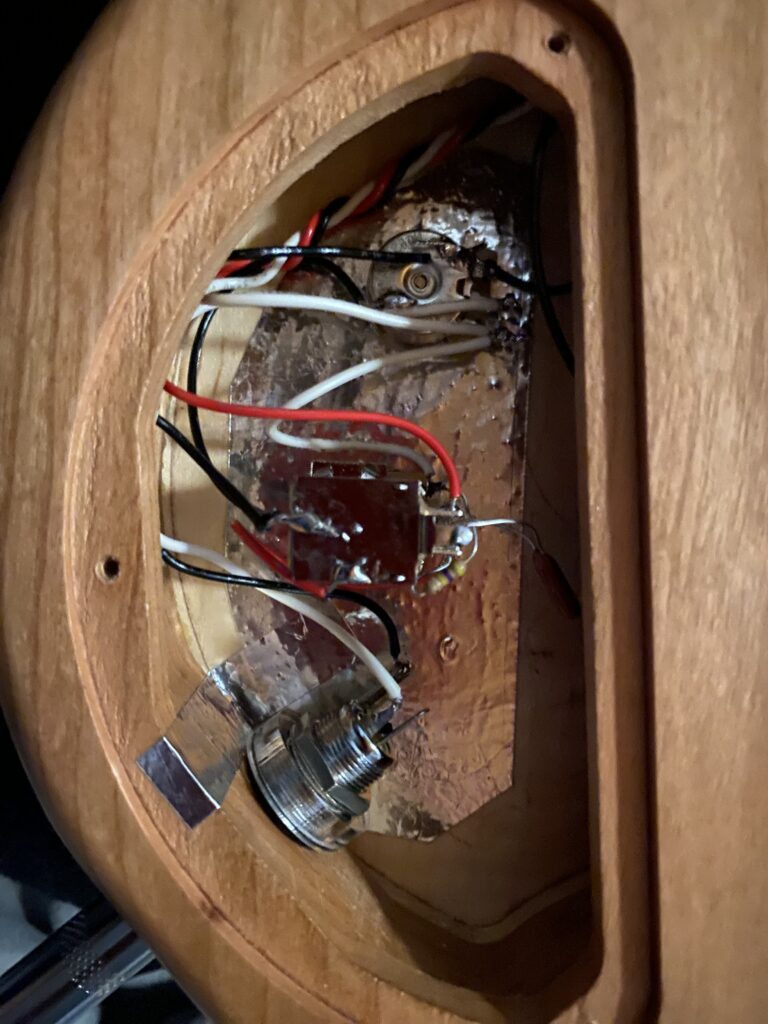
It was actually pretty cool to look inside and see the hollow-ness of my uke. Sorry, hard not to get distracted by the craftsmanship. Anyway, I noticed that I could cause the popping by touching the little foil strip that was next to the input jack. I’ve since learned that this is electromagnetic shielding, but before diving into this issue I didn’t really understand why the base and back plate were covered by such nice shiny and obviously carefully placed foil.
Since poking that point caused some static, and putting pressure on the back plate seemed to be a trigger for the issue. I decided to try put a piece of tape on top to break the connection to the foil on the shielding plate.
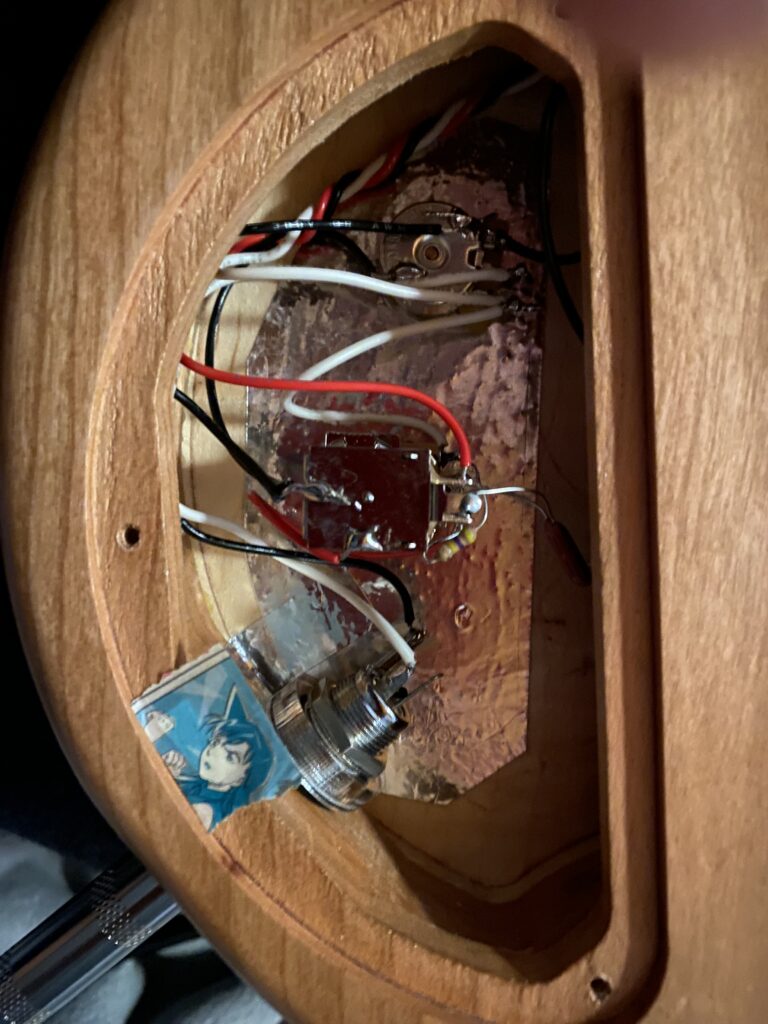
This seemed to mostly clear up the issue. Mostly. The static and popping was still there, just a lesser amount. And that’s really no good if I’m trying to create lush walls of sound. But was late so I went to sleep and decided to try work on it in the morning.
To my surprise, in the morning things had changed. Instead of static popping, my sound signal was cutting out completely in a classic display of a faulty instrument cable. Was it the cable after all? I redid the check with an acoustic-electric, and it was still fine. But still not ok in the electric. Very strange.
So I swapped out the cable, and… the complete signal loss stopped, but the static popping remained. My running theory for this is that because the Sparrow is about 1/2 the thickness of my acoustic ukes, it presses up against my bed in a different manner than the acoustics, causing problems with it that my acoustics might avoid. I’ve ordered a right-angle cable for the electric uke that should be better.
Ok, so fresh cable in, problem still persists. Next I thought that because I’m laying in bed, I maybe I could be putting an unusual pressure on the back plate that caused the block of the Tone knob to hit the foil and cause some sort of loop. So I put tape on top of that rectangle too. No change. I was out of ideas, so it was time to ask the Uke Tribe if they had any ideas. So I grabbed my phone and made another video to show what was happening.
Ironically, I unplugged my phone from charging to use the camera kit and capture the line in tone… and the buzzing stopped! D’oh! This video was captured by touching the charging cable even when the phone wasn’t plugged in, which I quickly discovered was a thing once I identified the culprit.
So in short: using the phone by itself is fine. Touching the charging cable by itself is not fine. Using the phone while it is charging is also not okay. But otherwise, there is no problem. I took off the tape that was interrupting the shielding contact, and it played again like the day I got it.
I certainly didn’t anticipate that my entire body would become slightly charged by just touching this cable. Thinking about it further, I suspect most people who are sitting or standing while playing probably have their phone on a desk or at arms length somehow so they may rarely have the charging cable in contact with their body while playing. And since my acoustic-electrics are all piezo-based, the extra charge never caused any problems.
So in the end it kind of was a special issue caused by my unique situation. But if you ever hear a buzz when you put your charging phone down on your lap… there is a supremely simple fix to the problem. Don’t touch that wire while playing! It could happen to you!
If you are new to the electric instrument game like me, maybe my experience here can save you some headache. Let’s have fun rocking our ukes, not troubleshooting random static!